Topical · F&B Marketing

The 11 most common questions in food & beverage marketing.

Every one of these lands in our inbox at least once a month. Most of them get answered with opinion. We answered them with the ad corpus instead — 103,750 live food and beverage ads, 1,033 brands, 10,170 landing pages.

103,750
F&B ads analyzed
1,033
Brands in corpus
10,170
Landing pages
11
Questions answered

Jump to a question

Pick the one you came for.

01 Budget

How much should a food and beverage brand spend on advertising?

Short answer

Enough to clear the learning phase on a real creative volume — not a percentage of revenue. For most F&B brands that floor is meaningfully higher than the number they arrive with.

The percentage-of-revenue rule is the most repeated answer in marketing and the least useful one in food and beverage. It assumes your constraint is money. It usually isn't. Your constraint is signal — whether the platform gets enough conversion events, on enough distinct creative, to figure out who your buyer is.

Below that threshold, more budget doesn't buy performance. It buys a longer, more expensive learning phase on creative that was never going to work. We've watched brands triple spend against a single hero video and get a worse blended CPA than they started with.

So the question to ask isn't "what percentage should we spend." It's three sharper ones: How many distinct creative concepts can we produce and refresh each month? What's our contribution margin per unit, and how many units does one new buyer need to purchase before we're whole? And how long can we fund the gap between acquisition and payback?

Answer those and the budget number falls out of the math. Skip them and you're guessing with a spreadsheet formula that was written for a category with none of your economics.
02 Measurement

What's a good ROAS for a food and beverage brand?

Short answer

There is no category benchmark worth managing to. A "good" ROAS is the one that clears your contribution margin and your repeat rate — which means a 1.8 can be excellent and a 4.0 can be a slow death.

ROAS is a ratio, and ratios are trivially easy to improve by shrinking the denominator. Cut spend to your warmest retargeting pool and ROAS goes up while the business goes nowhere. We see this pattern constantly: reported ROAS climbing quarter over quarter, new customer count flat or falling.

Food and beverage makes this worse than most categories, because the first purchase is rarely the point. A $34 first order on a coffee subscription and a $34 first order on a one-time gift box are the same ROAS and completely different businesses. One has a second, third, and twelfth purchase behind it. The other doesn't.

The number that actually governs the decision is what a new buyer is worth over the window you can afford to finance — and whether the ads are recruiting buyers who repeat. If your ROAS target is set without a repeat-rate assumption behind it, you don't have a target. You have a superstition.

The practical move: set the acquisition metric before campaigns launch, tie it to margin, and hold it fixed long enough to read. That's why every Schaefer engagement agrees on the target metric up front — it's the same number the guarantee is written against.

03 Targeting

Why do our ads reach the right people but still not convert?

Short answer

Because demographics describe who your buyer is, and creative has to answer why they buy. Those are different questions, and only one of them moves a purchase.

A 34-year-old woman in Austin with a household income over $100k might buy your product for health, for convenience, for her kids, for taste, or because it signals something about her. Five motivations, one demographic. An ad built for the demographic speaks to none of them clearly, so it speaks to all of them weakly.

This is what the Why People Buy Pyramid exists to sort out. Every ad leads with a motivational tier — basic function, emotional payoff, personal growth, or something beyond the self. When we classified the corpus by that tier, the distribution was lopsided in a way that explains a lot of underperformance:

What F&B ads actually lead with
Primary motivational tier · 103,750 ads
Basic function
29.7%
Emotional payoff
27.4%
Personal growth
23.1%
Promotion-led
17.6%
Beyond self
2.1%
Source: Schaefer AdVault, August 2026. Ads classified by primary motivational tier under the Why People Buy Pyramid. Percentages of classified ads.

Nearly three in ten F&B ads lead with basic function — what the product is and what it does. That's the easiest brief to write and the easiest one for a competitor to match. Meanwhile the tiers that create preference rather than comparison are where the field thins out.

None of which means "go emotional." It means the tier should be chosen because research says that's what drives your buyer, not because it's what the category defaults to.

04 Creative volume

How many ads does a food and beverage brand need to run?

Short answer

More than you're running. The median brand in our corpus has 31 ads in market. The top decile has 263 — and the gap between those two numbers is most of the performance gap.

Creative volume is the single most under-budgeted line in food and beverage. Brands will approve a media increase in a meeting and then run it against the same four assets they approved last quarter.

Ads in market, per brand
Distribution across 1,033 F&B brands
Median brand
31
Top 25%
96
Top 10%
263
Top 1%
999
Source: Schaefer AdVault, August 2026. Total ads observed per brand; bars scaled non-linearly for legibility. Mean 102, maximum 4,896.

The reason volume matters isn't that more ads are inherently better. It's that the algorithm is doing the targeting now, and creative is the input it targets with. Ten concepts against ten motivations give the system ten distinct conversion patterns to find and scale. One concept gives it one.

The practical read: if you're sitting at the median with 30-odd assets, the highest-return thing you can do this quarter is probably not a bid strategy change. It's tripling creative throughput — and structuring those assets so each one tests a different reason to buy rather than a different color grade of the same reason.

05 Creative fatigue

How often should we refresh our ad creative?

Short answer

Faster than feels comfortable. Nearly two-thirds of food and beverage ads are out of market inside 30 days, and a quarter don't survive their first week.

Brands consistently overestimate how long an asset lasts, usually because the asset took six weeks and three approval rounds to produce. The corpus is unsentimental about it:

How long F&B ads stay in market
Observed run duration · all ads with complete date ranges
24.5%
Under
1 week
39.6%
1–4
weeks
26.8%
1–3
months
5.7%
3–6
months
1.7%
6–12
months
1.7%
Over
1 year
Source: Schaefer AdVault, August 2026. Duration measured from first observed run date to last seen date. Includes ads deliberately retired, not only fatigued ones.

Two things follow. First, your production system matters more than any individual asset — a brand that can ship twelve concepts a month will beat a brand that ships one brilliant one, because eleven of yours are still alive when theirs dies. Second, the 3.4% of ads that run past six months are worth studying closely. They're almost never the polished brand film. They're usually a specific, unglamorous message that keeps working because it's answering a real motivation rather than decorating one.

Refresh cadence should be a calendar commitment, not a reaction. By the time frequency has climbed and CPA has visibly degraded, you've already paid for the fatigue.

06 Retail

Does paid social work for brands sold in grocery stores?

Short answer

Yes — but not as a direct-response channel. Its job is to pre-load the decision so the shelf moment is a confirmation, not a comparison.

The objection is understandable: you can't attribute a Kroger purchase to a Meta impression the way you can attribute a Shopify checkout. But "hard to measure" and "doesn't work" are not the same claim, and treating them as one has cost retail CPG brands an enormous amount of growth.

The retail purchase happens in about three seconds, in front of a dozen alternatives, with the buyer's hand already moving. Almost nothing about that moment is persuadable. What's persuadable is everything that happened before it — whether your brand is already in the consideration set when they walk down the aisle.

The shelf moment is decided before the shelf
Where paid media actually operates in retail CPG
Days to weeks before Paid social, video, retail media build the memory and the reason 3 seconds at shelf Confirmation, not persuasion WHERE THE DECISION IS MADE WHERE MOST BRANDS SPEND THEIR ATTENTION Packaging, price, placement
Retail CPG brands routinely optimize the three-second window and under-invest in the weeks that determine its outcome.

Measurement doesn't have to be perfect to be decision-useful. Geo holdouts, matched-market tests, and same-SKU velocity reads against media weight will all tell you whether the spend is moving units. They require planning the test before the campaign, which is the part most brands skip.

07 Channels

Which platforms should a food and beverage brand advertise on?

Short answer

Fewer than you think, chosen by your price point and purchase frequency — not by which platform had a good case study at a conference.

A $6 grocery SKU and a $60 DTC subscription box are not the same advertising problem, and they don't belong on the same channel mix. The $6 SKU can't absorb a $40 acquisition cost, which rules out most of what works for the subscription. The subscription can afford to buy attention outright, which the SKU cannot.

Two questions settle most of it. What can one new buyer be worth in the first 90 days? And how often does this product get repurchased without being re-sold? High value plus high repeat can justify almost any channel. Low value plus low repeat needs channels where the creative does the persuading and the media is cheap enough to lose on the first purchase.

The failure mode we see most isn't picking the wrong platform. It's picking five — spreading budget so thin that none of them ever exit the learning phase, then concluding that all five "didn't work." Concentration beats coverage until you have proof.

08 Retail media

Do we need retail media — Amazon, Walmart Connect, Instacart?

Short answer

If you have the distribution, yes — but run it as the closing half of a system, not as a standalone budget line. Retail media harvests demand efficiently and creates very little of it.

Retail media's appeal is obvious: it sits closest to the transaction, so the reported returns look outstanding. That's also its trap. A channel positioned at the point of purchase will always report well, because it's collecting credit for demand that something else created.

Run in isolation, retail media tends to plateau — you capture the people already searching your category, and then you've captured them. The compounding version pairs it with upper-funnel work that puts your brand into the search in the first place, so the retail media dollar is closing a decision your paid social started.

The coordination detail that matters most is message continuity. If the Meta ad sells a specific motivation and the Amazon listing sells a feature list, you've broken the chain at the exact moment it was supposed to pay off.

09 Creative

What kind of ad creative actually works for food and beverage?

Short answer

The format matters far less than the reason to buy inside it. That said, the category is heavily concentrated in product-forward and creator-led work — which is exactly where differentiation gets hard.

Here's how the corpus breaks down by creative approach:

Creative approaches in food & beverage
Share of classified ads · excludes 22.9% unclassified
Product feature
23.1%
Creator / UGC
15.5%
Promo / offer
13.4%
Lifestyle
9.1%
Recipe / use case
5.7%
Explainer
3.9%
Brand world
3.2%
Humor / skit
1.9%
Partnership
1.4%
Source: Schaefer AdVault, August 2026. Ads classified by primary creative approach; 22.9% did not resolve to a single approach and are excluded.

Two structural notes from the same dataset. Copy runs short — 48.7% of ads keep primary text between 50 and 150 characters, and only 4.4% exceed 600. And the call to action is nearly uniform: 59.6% of F&B ads use "Shop now" and another 20.3% use "Learn more." Four in five ads in your category are making the same ask in the same words.

48.7%
of ads keep copy between 50 and 150 characters
59.6%
use "Shop now" as the call to action
13.3%
send paid traffic to the homepage rather than a specific page

That last number is the cheapest fix on this page. One in eight food and beverage ads spends money to earn a click and then drops the buyer on a homepage, asking them to re-find the thing the ad just sold them.

Live from the AdVault

Every number on this page came from ads like these.

103,750 of them, refreshed as new creative ships. Free to browse, no email required.

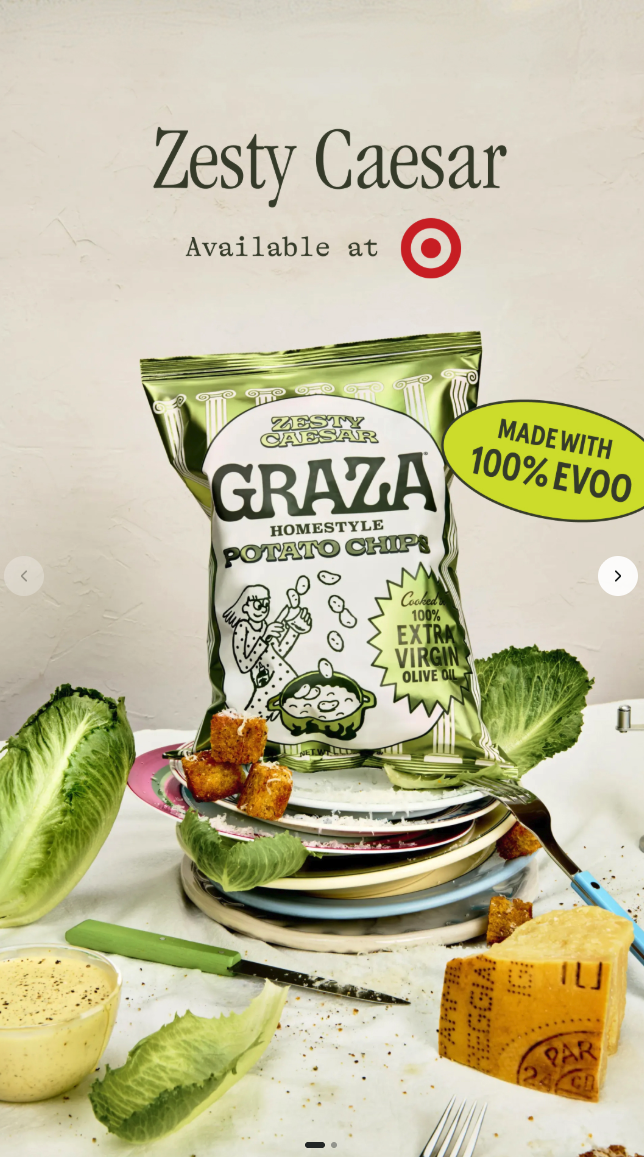
Graza olive oil Meta ad creative featuring a caesar salad recipeGraza
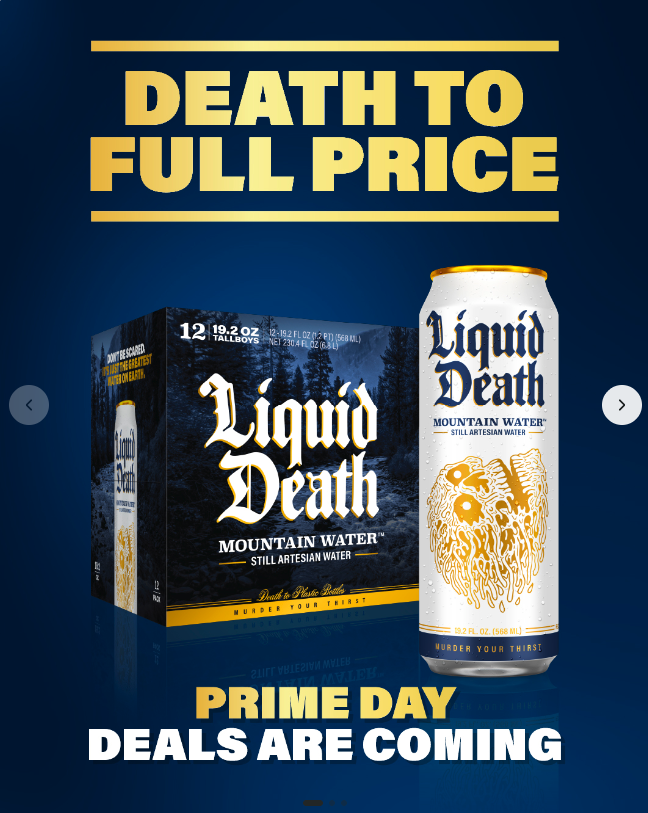
Liquid Death Meta ad creativeLiquid Death
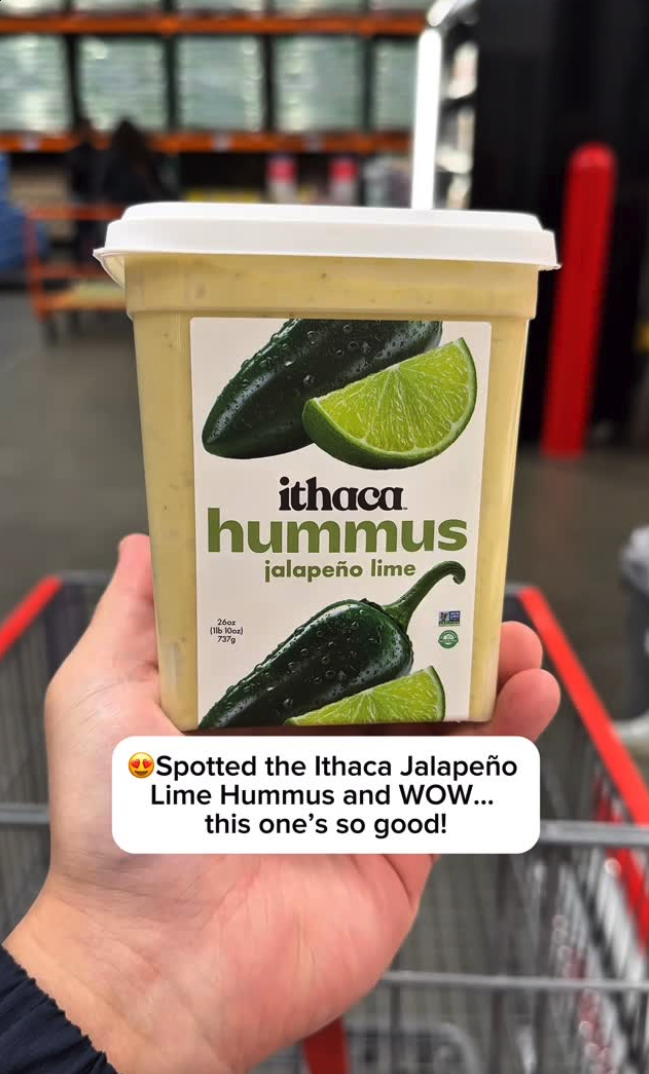
Ithaca Hummus Meta ad creativeIthaca
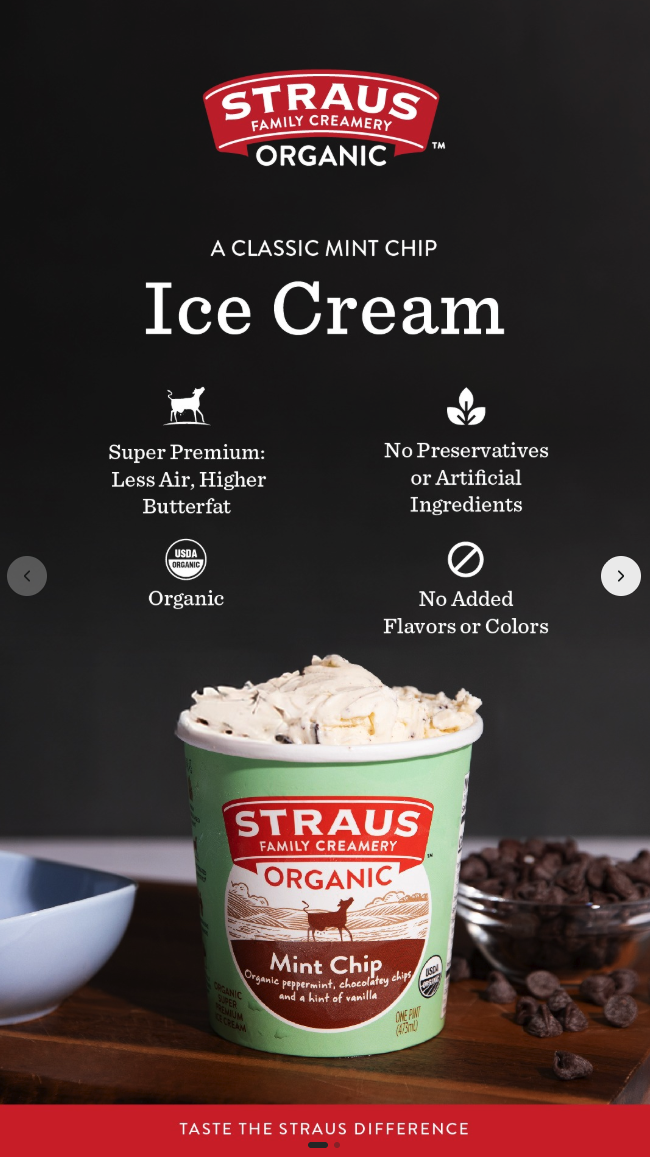
Straus Family Creamery mint chip ice cream Meta ad creativeStraus
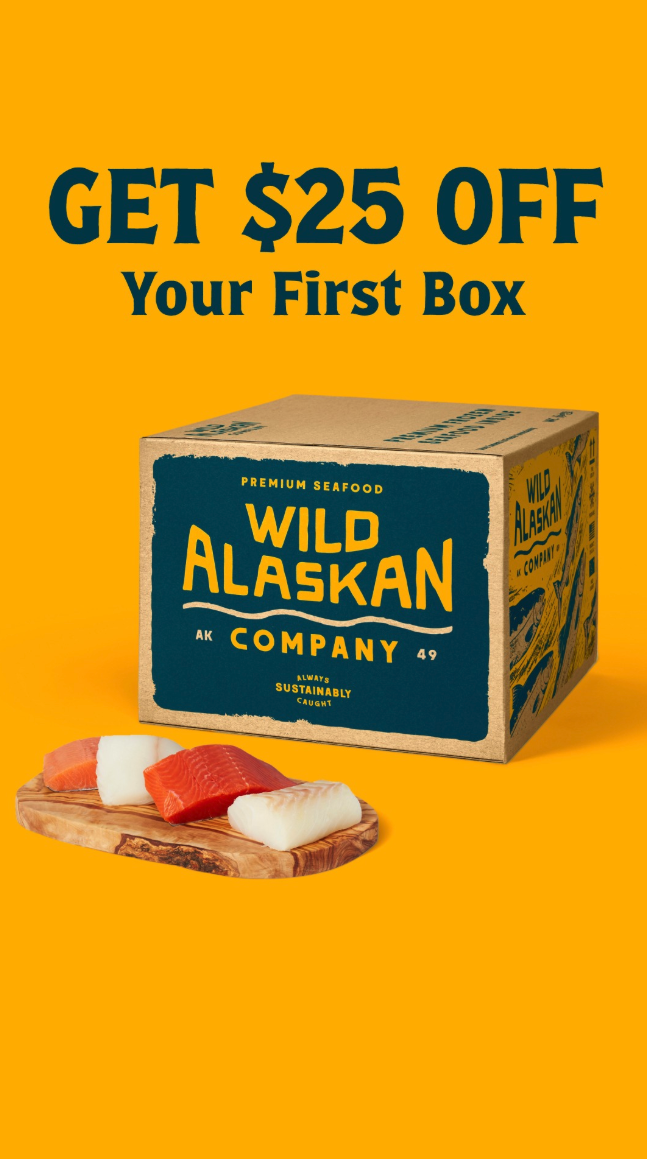
Wild Alaskan Company seafood Meta ad creativeWild Alaskan
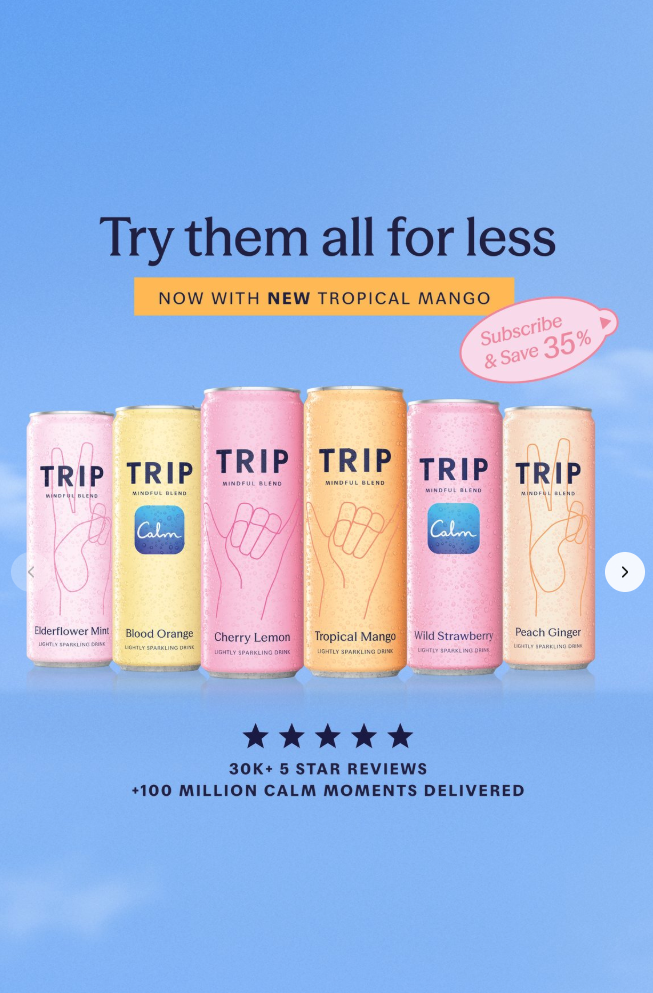
TRIP beverage Meta ad creativeTRIP
Explore the AdVault — Free ↗
10 Pricing

Should we discount to drive trial?

Short answer

Sparingly, and never as the lead message. Nearly one in five F&B ads leads with a promotion — which means discounting buys you a crowded position, not a distinctive one.

A discount is a legitimate tool for removing friction from a decision someone has already made. It's a poor tool for creating the decision. When the offer is the message, you recruit buyers whose reason for buying was the offer — and that reason expires the moment the promotion does.

Our tier analysis puts 17.6% of all F&B ads in the promotion-led bucket. That's a lot of brands competing on the one dimension where the biggest balance sheet always wins. If a national brand decides to match your discount, they can do it longer than you can.

The version that works: lead with the reason to buy, and let the offer close. Same promotion, different order of operations — and the buyer you acquire has a motivation attached to them that survives the price going back up.

This is the same trap we mapped in restaurants, where loyalty programs quietly became discount programs and trained the most valuable customers to wait for the deal.

11 Research

How do we find out why people actually buy our product?

Short answer

You ask them — and you ask the people who bought your competitor instead. Almost nothing else in this list can be answered well until that one is.

Most brands are working from a theory of their buyer that was formed at founding and never tested. It's usually not wrong so much as incomplete: it captures the motivation of the earliest, most enthusiastic customers, who are the least representative people you will ever sell to.

Three sources get you most of the way. Interviews with recent buyers, close enough to purchase that they can still reconstruct the decision. Surveys sized to tell you which motivations are common rather than merely vivid. And conversations with people who considered you and bought something else — the group almost nobody talks to, and the one holding your actual objection.

What comes back is rarely what the brand deck says. In the Cōpow research, the barrier to local organic food turned out to be convenience, not values — which reframed the entire go-to-market. In Meatworks, research surfaced two distinct buyer profiles the existing ads spoke to neither of.

Then the finding becomes the brief, the brief becomes the creative, and the questions above stop being guesses. That sequence — research, then brief, then media — is the whole of what we do.

Methodology

Where these numbers come from

Every statistic on this page is drawn from the Schaefer AdVault as of August 2026 — a continuously updated corpus of 103,750 live food and beverage ads from 1,033 brands, paired with 10,170 landing pages those ads point to. Ads are classified by primary motivational tier under the Why People Buy Pyramid and by primary creative approach.

Two honest limitations. Run duration measures how long an ad was observed in market, which includes ads retired on purpose as well as ads that fatigued — so it describes creative lifespan, not fatigue specifically. And the corpus covers Meta placements, so it reads the category's paid social behavior rather than its full media mix. Neither changes the direction of any finding here, but both are worth knowing before you quote them.

The AdVault is free and open. If you want to check our arithmetic, go check it.

Who wrote this

Who is Schaefer?

We're a paid media agency that works with food and beverage brands — and nothing else. Not because we can't do other categories, but because leaving one is how agencies stop being useful in it. Every campaign we run makes us sharper for the next F&B brand. That only compounds if we never leave.

Most agencies learn your category on your dime. By month six they're passable, by month twelve you're their case study and they've moved to the next vertical. We started inside grocery, QSR, and DTC food, and we stayed.

  • We run our own research. Roughly 135,000 F&B customer conversations a year — surveys, 1:1 interviews, in-store — in-house, not outsourced to a research firm. We find the purchase trigger before a dollar goes to media.
  • We build creative the algorithm can read. Platforms don't need a narrower audience, they need creative specific enough to attract the right buyer. Broad targeting plus a validated motivator beats narrow targeting plus generic creative — every time.
  • We put the fee behind it. The target metric is agreed before launch. If we miss it in the first three months, you get 100% of your fees back — not a credit, not a partial refund.
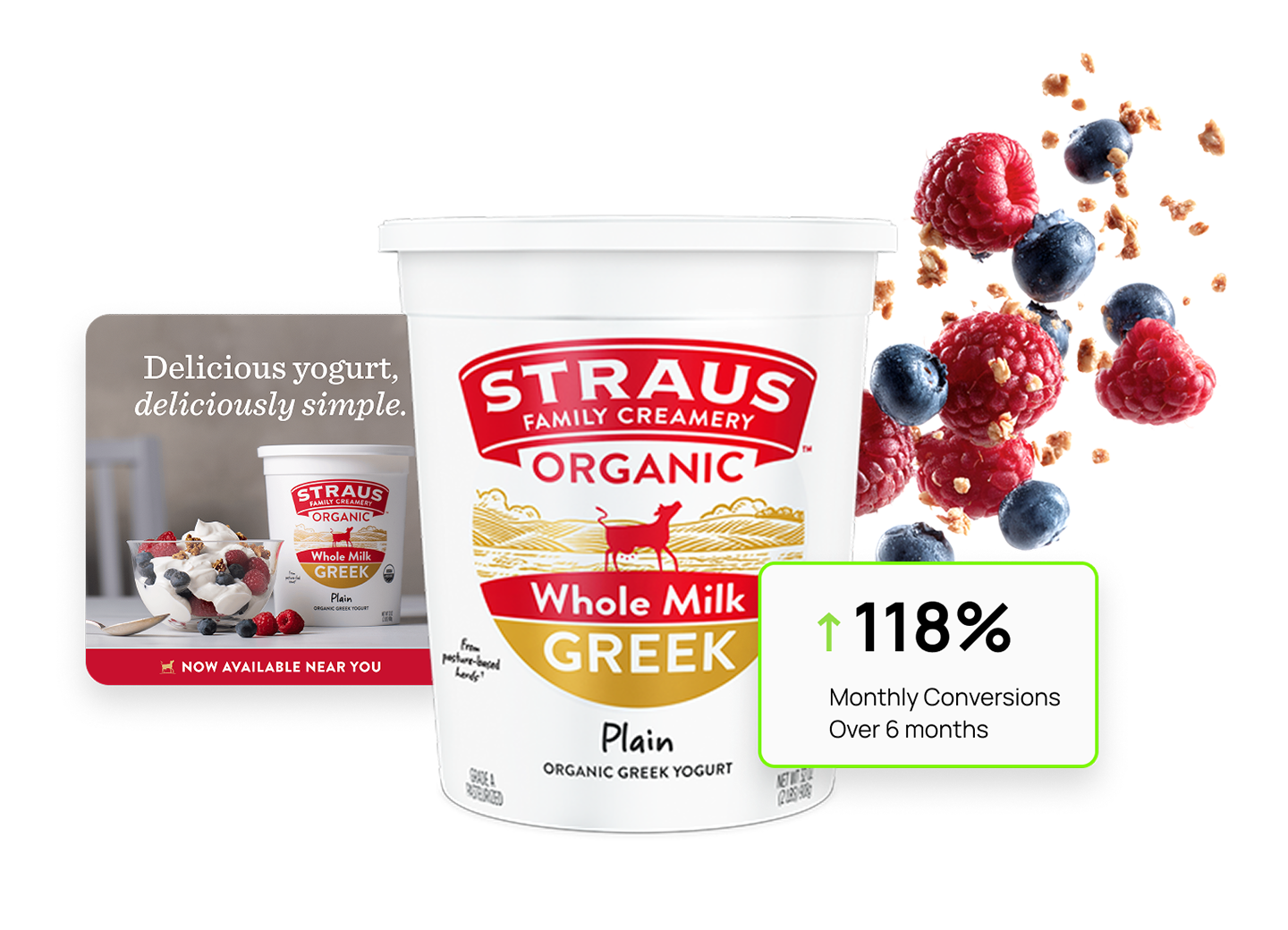
Straus Family Creamery organic whole milk Greek yogurt with Schaefer campaign creative and a 118% monthly conversion lift result
~135,000
F&B customer conversations a year
103,750
Ads in the AdVault corpus
100%
Fees back if we miss the target

Have a twelfth question?

We work with food and beverage brands exclusively. Tell us what you're running into and we'll tell you what we'd do about it.

Tell Us About Your Brand → Or read our agency FAQ →