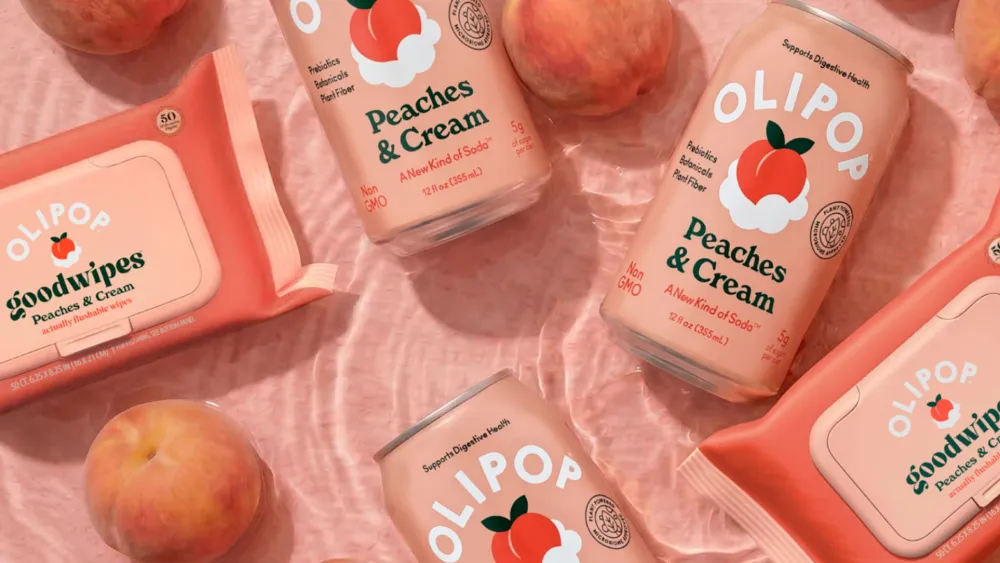
The internet thought it was an April Fools' joke. Peaches & Cream-scented butt wipes, co-branded with Goodwipes, called "Peachy Clean." Then they revealed the joke was real.
150-count packs of plant-based, flushable wipes scented after OLIPOP's fan-favorite soda flavor. Exclusive launch in roughly 4,000 Walmart locations through August. A comedic video campaign called "Freshology 101" fronted by Jonas Brothers tour opener DJ Mikey Deleasa. Sampling at REVOLVE Festival next to a luxury mobile restroom.
Most people read this as a stunt. It isn't. It's a textbook partnership and licensing play, and every F&B founder should be studying it.
"The best partnerships aren't about audience overlap. They're about category access."
What partnerships actually buy you
There's a version of partnership marketing that goes like this: find a brand that shares your audience, run a co-branded campaign, split the impressions. The math feels safe. The lift is marginal.
That's not what OLIPOP and Goodwipes did. They didn't partner because their buyers overlap. They partnered because each brand opens a door the other couldn't open alone.
The underrated part: the rebate
Buy three cans of OLIPOP Peaches & Cream, get a free pack of Goodwipes.
That's not a gimmick. That's a velocity mechanic. OLIPOP just turned a partnership into a multi-unit purchase incentive for one specific SKU inside one of their most important accounts. The collaboration earns the headlines. The rebate earns the units.
This is the pattern most brands miss when they evaluate partnerships. They look at reach and forget that the deal needs a behavior attached to it — something that translates attention into a basket.
Where this lives on the Why People Buy pyramid
OLIPOP's brand equity already sits high on the pyramid. Trust. Nostalgia. Identity. They've spent years building affinity that has nothing to do with grams of fiber or calorie count.
This partnership is a Tier 4 move — pure cultural conversation. It only works because the foundation underneath it was already built.
The Schaefer Take
If your brand is stuck inside its own category, the question isn't "who has my audience." It's "who has the context I want to be part of."
Audience-overlap partnerships chase reach you mostly already have. Category-access partnerships put your brand in conversations, aisles, and consideration sets you couldn't earn alone.
And the best ones — the ones that pay back in units, not just impressions — have a velocity mechanic baked into the deal from day one.
The lesson for F&B brands
OLIPOP didn't need more soda buyers in the Goodwipes audience. Goodwipes didn't need more wipes buyers in OLIPOP's audience. They needed each other for what only the other could provide — a new context, a new aisle, a new reason for the press to write about something that would otherwise sit on a shelf.
And both sides are making money. Goodwipes owns the SKU, the shelf placement, and the Walmart relationship — they're the ones ringing the register. OLIPOP is converting borrowed cultural permission into a velocity mechanic for one of their flavors. This isn't a marketing stunt. It's two brands building real revenue off each other's equity.
That's the bar partnerships should clear. Reach is the consolation prize. The real win is access — and a P&L impact on both sides of the deal.