
Food & Beverage Paid Media · Exclusively
Work With Us →
Research-led advertising for the meat industry — processors, co-manufacturers, ingredient suppliers, and the brands in the case. Every campaign starts with 6,172 tracked meat and protein ads, sorted by the motivation they're actually selling on.
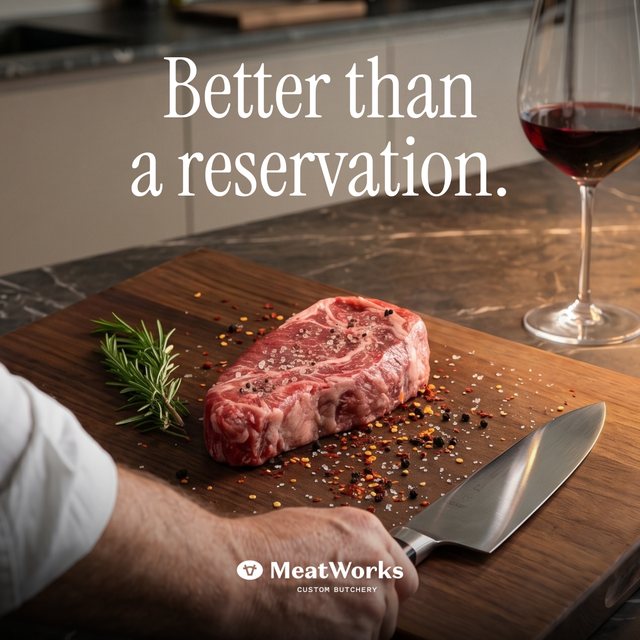
Both halves of this business are selling protein to somebody who is buying something else. Find out what that something else is, and the advertising stops competing on price.
Your buyer is an operator, a chain R&D lead, a category manager. They don't buy protein — they buy labor relief, consistency, and a spec they can defend to their boss. Most category marketing here is capability decks and trade show booths. Research changes the conversation.
A survey that started as a competitive landscape study turned up an entire product line inside existing capability — $8M in EBITDA within nine months, and an acquisition by a publicly traded company.
Your buyer is a shopper standing in front of a case, and they don't all want the same thing. One message serves neither of the two people actually buying — and the category's answer has been to say "protein" louder.
The research replaced a 30–45 year-old grill dad with a retiree over 65, cooking indoors for one or two. Conversion rates doubled once each buyer saw creative built for their motivation. Not one additional dollar of media spend.
Every ad answers a why. We sort them into five: what the product does, what it costs, how it feels, who it makes you, and what it stands for. Here is where three categories actually spend their inventory.
Seven in ten ads argue price or basic need. The top three rungs are effectively unclaimed.
Same shelf, same shopper, same regulatory drag. Two thirds of its inventory argues how it feels.
A category that is literally powder, sold almost entirely on who it makes you.
The industry is advertising at the bottom of the ladder and competing on the only axis where everyone looks the same. Every rung up is unclaimed. That's not a creative problem — it's a research problem, and it's the one we solve first.
Percentages are every tracked ad in each category, classified by the motivation it leads with. Alcohol and supplements aren't selling a better product than meat. They're selling a better reason.
The order matters more than any single step. Media buying is the last decision we make, not the first.
Interviews, surveys, and the AdVault motivation set — before any media runs. We come back with the reason your buyer actually reaches for the pack, named and sized.
Separate creative per motivation, not one message split by audience. The same cut of meat gets a different argument depending on who is standing in front of the case.
Every campaign feeds the category set, and the category set sharpens the next campaign. Your third quarter with us is smarter than your first because the corpus grew.
Processors and co-manufacturers selling to operators. Retail and DTC brands selling to shoppers. Same research discipline, aimed at two completely different buyers — which is why neither side has to explain their business to us first.
Ingredient suppliers, co-manufacturers, and further processors selling into operators and category managers.
Retail, DTC, and subscription meat brands competing for a shopper standing in front of the case.



 Simmons Foods
A partner to the Balanced Protein Consortium, and the authors of the Balanced Proteins: State of the Category report — a 4,201-person consumer survey published in January 2026. When the industry wants to know how buyers think about protein, this is the document it reads.

Both case studies on this page started as something narrower than what they became. That happens when you ask why before you ask how much.
What impressed us most about Schaefer was their meticulous attention to detail. These outcomes have directly shaped our positioning and strong launch.
Corpus at time of writing: 156,398 ads across 1,372 brands, of which 6,172 are meat and protein. Figures refresh as the vault ingests.
We'll tell you whether the research says you're right.
Food and beverage brands only. We don't take clients outside the category, which is the reason the category knowledge is worth anything.